Source High-Accuracy Soap Cartoning Machine for Tea, Snack, Dairy
Find 30 high-accuracy soap cartoning machines from verified manufacturers in China. Compare specifications for tea, snack, and dairy products packaging with speeds up to 220 boxes per minute.
Key considerations
Products List


Automatic Multi-Function Efficient Soap Cartoning Machine Manufacturers
$3500.00 - $60000.00
MOQ: 1 Sets


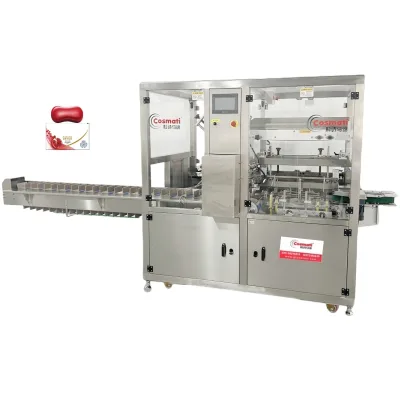

High Speed Heavy Duty Soap Cartoning Machine Wear-Resistant Premium
$33000.00 - $40000.00
MOQ: 1 Pieces

Automatic Soap Bar Cartoning Machine Hotel Soap Carton Box Packing Machine
$22000.00 - $25000.00
MOQ: 1 Pieces


Multifunctional Automatic Carton Soap Packaging Machine with Great Price
$12000.00 - $15000.00
MOQ: 1 Pieces


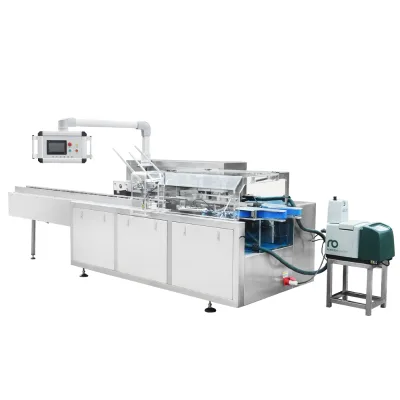
Factory Price Full Automatic Soap Cosmetic Cartoning Machine Box Packing Machine with CE
$23361.68 - $24174.26
MOQ: 1 units


Automatic Soap Cartoning Packaging Machine Bottle Box Packing Machinery
$18000.00 - $28500.00
MOQ: 5 Sets

Comprehensive Sourcing Guide
Strategic Sourcing Guide for High-Accuracy Soap Cartoning Machines
Understanding the Technical Landscape of Soap Cartoning Systems
When sourcing a high-accuracy soap cartoning machine, buyers must first distinguish between the specific forming mechanisms and the material handling capabilities required for their production line. The market presents distinct configurations, primarily categorized by their forming species and automatic grade. One prevalent configuration utilizes a "Blister Forming" mechanism, which is often integrated with an "Automatic" grade system to ensure consistent throughput. In contrast, other viable options employ a "Box Molding" function, typically operating at a "Semi-Automatic" grade. This distinction is critical because the choice between fully automatic and semi-automatic systems directly influences the operational workflow, labor requirements, and the precision of the final packaging.
The mechanical architecture of these machines varies significantly based on the driven type. High-accuracy units are frequently driven by mechanical systems, which offer robust performance for heavy-duty tasks like soap cartoning. However, electric-driven models are also available, particularly for applications requiring finer control over sealing and forming functions. The forming function itself is a dual-purpose capability in many modern units, encompassing both "Forming" and "Seal" operations within a single cycle. This integration ensures that the carton is not only shaped correctly but also securely closed, which is essential for maintaining the integrity of soap products during transit.
The versatility of these machines is further demonstrated by their application range. While the core keyword focuses on soap, the underlying technology often supports a broader spectrum of industries. These units are frequently designed to handle "Tea, Snack, Dairy Products, Skin Care Products, and Cosmetics." For soap manufacturers specifically, the machines are optimized for "Toilet Soap, Laundry Soap, Hotel Soap, and Hand Made Soap." This multi-application capability suggests that the machinery is adaptable, though buyers should verify that the specific model selected is tuned for the density and dimensions of soap bars rather than generic cartoning tasks.
Critical Technical Specifications and Dimensional Constraints
The precision of a cartoning machine is fundamentally defined by its ability to accommodate specific box dimensions and material quality requirements. When evaluating potential equipment, buyers must scrutinize the box dimension ranges to ensure compatibility with their existing or planned packaging. One observed specification range for high-performance units is (80-120) x (40-70) x (20-38)mm, which is suitable for smaller, compact soap bars. Conversely, other configurations support a wider range of (70-180) x (30-80) x (15-60)mm, catering to larger or more varied product sizes. Some advanced models specify a paper box smallest size of 602020mm and a largest size of 2008080mm, providing a broad operational envelope.
Material quality is another non-negotiable specification. The machine's ability to handle the carton stock is directly linked to the "Box Quality Requirement." High-accuracy machines are often calibrated to work with paper board ranging from 250-300G/M2 or 300-350G/M2. Selecting a machine that cannot handle the required grammage may result in misfeeds, poor sealing, or structural failure of the carton. Additionally, the packaging material itself is a key consideration; while some systems are designed for "Paper," others may utilize "Composite Materials" or handle "Bottles" and "Blister Sheets," indicating a need for precise alignment between the machine's feeding mechanism and the specific packaging material in use.
Packing speed is a primary driver of production efficiency. The observed packing speeds for these machines range from 20 to 220 boxes per minute, with some specific models operating within a 20-80 boxes per minute range. The "High-Speed Horizontal Cartoning Machine" designation often correlates with the upper end of this spectrum. Buyers must balance the need for speed against the requirement for accuracy; higher speeds can sometimes compromise the precision of the forming and sealing process if the machine is not properly calibrated. The physical footprint of the machine is also a constraint, with dimensions such as 48007801900mm being observed for larger industrial units, necessitating adequate floor space and layout planning.
Compliance, Standards, and Certification Verification
In the B2B procurement of industrial machinery, verifying compliance with international standards is a critical step to ensure safety, reliability, and market access. While specific certification statuses like ISO 9001 or ISO 13485 are often cited in general industry knowledge, buyers must rely on the actual documentation provided by the supplier for each specific unit. The supplied context indicates that some machines adhere to standards such as "ISO," but it is imperative to confirm the exact version and scope of these certifications before finalizing a purchase.
The construction standards of the machine are equally important. The "prod_standard" attribute frequently lists materials such as "Stainless steel" and "Carbon steel." Stainless steel is often preferred for soap and cosmetic applications due to its resistance to corrosion and ease of cleaning, which aligns with hygiene requirements in the food and personal care industries. Buyers should verify the grade of stainless steel used, as this impacts the machine's longevity and its ability to withstand the chemical properties of soaps and cleaning agents.
Furthermore, the origin of the machine plays a role in compliance. Products originating from "Nantong City, China" or "Zhejiang, China" are common in this sector. While the location itself does not dictate quality, it informs the buyer about the regulatory environment and the specific export standards the manufacturer must meet. The "prod_packing" attribute, which may include "Export Standard Packages" or "Wooden Cases," also serves as an indicator of the manufacturer's attention to detail in logistics and protection during shipping. Buyers should ensure that the packaging standards meet the requirements of their destination country to avoid damage during transit.
Cost Drivers and Pricing Variables
The pricing of high-accuracy soap cartoning machines is influenced by a complex interplay of factors, including automation level, material specifications, and production capacity. The observed price range in the market spans from 0 to 88,000 USD, reflecting the vast difference between entry-level semi-automatic units and high-end fully automatic systems. This wide variance underscores the importance of defining clear requirements before requesting quotes. A machine with a "High-accuracy" selling point and a speed of 220 boxes per minute will naturally command a higher price than a basic model with a speed of 20 boxes per minute.
Material costs are a significant component of the final price. Machines constructed primarily from stainless steel will generally be more expensive than those using carbon steel, due to the higher cost of raw materials and the additional processing required. Similarly, the complexity of the forming mechanism, such as the ability to handle "Blister Forming" versus simple "Box Molding," adds to the engineering and manufacturing costs. The "Automatic Grade" is another major cost driver; fully automatic systems require more sophisticated sensors, control systems, and actuators, all of which contribute to a higher unit price.
Minimum Order Quantity (MOQ) and lead times also impact the overall cost structure. The observed MOQ range is typically between 1 and 5 units, which allows for flexibility in procurement. However, buyers should be aware that customizations, such as specific dimensions or branding, may increase the MOQ or lead time. The "Customization: Available" attribute suggests that buyers can tailor the machine to their specific needs, but this flexibility often comes with a premium. Additionally, the "prod_packing" method, whether "Export Standard Packages" or "Ooden Case," can affect shipping costs and insurance premiums, which should be factored into the total cost of ownership.
Typical Applications and Operational Versatility
While the core focus is on soap cartoning, the versatility of these machines allows them to serve a broader range of applications. The "Application" attribute lists "Tea, Snack, Dairy Products, Skin Care Products, and Cosmetics," indicating that the underlying technology is adaptable to various product types. This versatility is particularly valuable for manufacturers who may expand their product lines or switch between different packaging formats. For instance, a machine capable of handling "Toilet Soap" and "Laundry Soap" may also be configured to package "Hand Made Soap" or "Hotel Soap" with minimal adjustment.
The specific "Forming Species" and "Forming Function" determine the suitability for different product types. "Blister Forming" is ideal for products that require a clear, protective outer layer, such as certain cosmetics or small hardware items. In contrast, "Box Molding" is more suited for traditional cardboard cartons used for bulk soap bars. The "Keyword" attributes, such as "Soap Cartoning Machine" and "Carton Wrapping Machine," highlight the primary use cases, but the "Function" of "Boxing" and "Blister Sealing Package" suggests a dual capability that can be leveraged for diverse packaging needs.
The "Driven Type" also influences the application. Mechanical systems are robust and suitable for high-volume, repetitive tasks, making them ideal for large-scale soap production. Electric-driven systems, on the other hand, offer greater precision and control, which is beneficial for delicate or high-value products like premium cosmetics. Buyers should evaluate their specific product characteristics, such as weight, shape, and fragility, to determine which driven type and forming mechanism will yield the best results.
Supplier Evaluation and Quality Control Protocols
Evaluating suppliers for high-accuracy soap cartoning machines requires a rigorous approach to quality control and performance verification. The "key_selling_points" such as "High-accuracy" must be substantiated through tangible evidence, such as test results or performance data. Buyers should request detailed specifications regarding the machine's tolerance levels, error rates, and consistency in forming and sealing operations. The "prod_model" identifiers, such as "ST-CP280" or "ZH-50," serve as unique references for these evaluations, allowing buyers to track specific performance histories and user feedback.
Quality control protocols should extend beyond the machine itself to include the manufacturing process and the materials used. The "prod_standard" of "Stainless steel/Carbon steel" should be verified through material certificates or third-party testing. Buyers should also inspect the "prod_packing" to ensure that the machine is protected during shipping and that the packaging meets international standards. The "Location" of the manufacturer, whether in "Nantong City" or "Zhejiang," can provide insights into the local supply chain and the manufacturer's reputation in the region.
Supplier reliability is another critical factor. The "Customization: Available" attribute indicates a willingness to adapt to buyer needs, but buyers should assess the supplier's track record in delivering customized solutions on time and within budget. The "Automatic Grade" and "Packing Speed" specifications should be validated through live demonstrations or video evidence of the machine in operation. Buyers should also inquire about the availability of spare parts, technical support, and training services to ensure long-term operational success.
Long-Term Procurement and Operational Sustainability
Sourcing a high-accuracy soap cartoning machine is not merely a one-time transaction but a strategic decision that impacts long-term operational efficiency and sustainability. The "prod_packing" of "Export Standard Packages" or "Wooden Cases" ensures that the machine arrives in optimal condition, but the long-term value depends on the machine's durability and maintenance requirements. The "Standard" of "Stainless steel" construction is a key indicator of longevity, as stainless steel resists corrosion and wear, reducing the frequency of part replacements and downtime.
Buyers should consider the energy efficiency of the machine, particularly for "Electric" driven models. High-accuracy machines often incorporate advanced control systems that optimize energy consumption, which can lead to significant cost savings over the machine's lifespan. The "Packing Speed" of 20-220 boxes per minute allows for scalability, enabling buyers to increase production capacity without investing in additional equipment. This scalability is crucial for businesses anticipating growth or seasonal demand fluctuations.
Finally, the "Customization: Available" feature offers a pathway to future-proofing the investment. As product lines evolve or packaging requirements change, the ability to modify the machine's settings or components ensures that the equipment remains relevant and effective. Buyers should work with suppliers who offer comprehensive after-sales support, including regular maintenance schedules, software updates, and technical training. By prioritizing these long-term considerations, buyers can secure a reliable and efficient cartoning solution that delivers value over many years of operation.
FAQs
What box dimensions can high-accuracy soap cartoning machines handle?
These machines accommodate box sizes ranging from 60x20x20mm to 200x80x80mm depending on the model. Specific units support dimensions like 80-120mm by 40-70mm by 20-38mm or 70-180mm by 30-80mm by 15-60mm for various soap types.
Can these machines process different types of soap products?
Yes, they are designed for toilet soap, laundry soap, hotel soap, and hand-made soap. The system also supports packaging for tea, snacks, dairy products, skin care, and cosmetics using the same forming mechanisms.
Which automatic grade options are available for soap cartoning?
Buyers can choose between fully automatic and semi-automatic grades based on production needs. Automatic models often feature mechanical driven types with speeds up to 220 boxes per minute for high-volume output.
How fast can a high-accuracy soap cartoning machine operate?
Packing speeds typically range from 20 to 220 boxes per minute depending on the specific configuration. Some models operate at 20-80 boxes per minute while others reach higher speeds for horizontal cartoning tasks.
What material quality requirements do these machines support?
The equipment handles paper board with quality requirements between 250-350G/M2. Specific models are calibrated for 250-300G/M2 or 300-350G/M2 to ensure proper forming and sealing of carton boxes.
Are customization options available for these cartoning machines?
Customization is available to tailor machines to specific production requirements. Buyers can request adjustments for forming species, box dimensions, or packaging materials like paper or composite materials to fit their line.